
The Story of
Pasadena
From the Hahamog'na people and the founding of the Indiana Colony to the Rose Parade, the Gamble House, Caltech, and one of America's most architecturally protected cities — the layered history of the Rose City.
A City Built in Layers
Pasadena's history reaches back thousands of years to the Hahamog'na, a band of the Tongva people who lived along the Arroyo Seco long before any European arrival. In 1771, Spanish Franciscans founded Mission San Gabriel Arcángel nearby, and the land that would become Pasadena passed through the Mexican rancho era before a group of Indiana settlers arrived in 1873–1874 seeking a new farming colony at the foot of the San Gabriel Mountains.
From the Indiana Colony's citrus orchards, through the grand resort-era hotels of Millionaire's Row and the very first Tournament of Roses parade in 1890, to Greene & Greene's Arts and Crafts masterpiece at the Gamble House, the 1922 Rose Bowl Stadium, the 1927 Mediterranean Revival City Hall, the rise of Caltech and the Huntington as world-class institutions, and the preservation-driven revival of Old Pasadena in the 1980s and 1990s — Pasadena has continuously reinvented itself without losing a single layer of its past. This is the story of how a farming colony became the Rose City.
Rose City Did You Know
Pasadena was officially incorporated on June 19, 1886 — one of the earliest incorporated cities in Los Angeles County, according to the City of Pasadena's official Heritage history.
Timeline of Pasadena
From the Hahamog'na homeland to the Rose City of today.
The Hahamog'na — Original People of the Arroyo
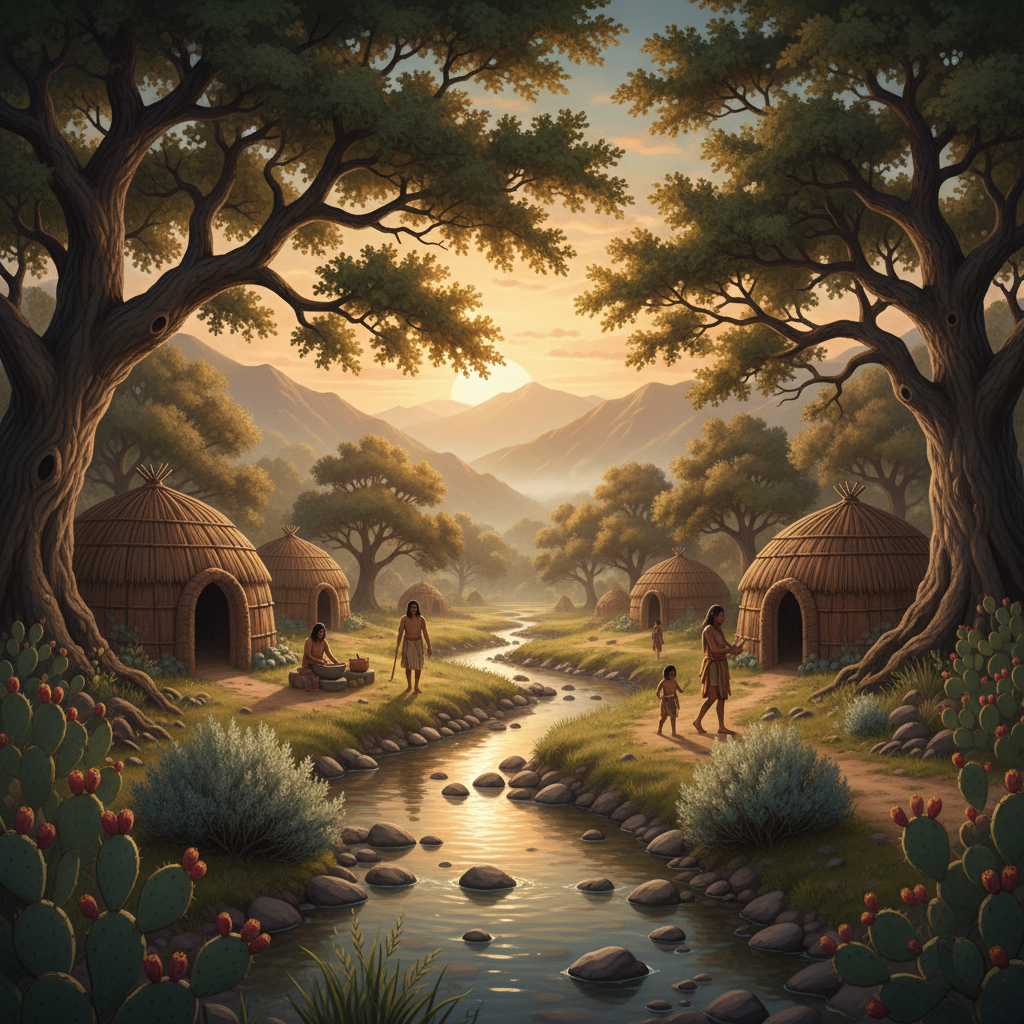
The Hahamog'na, a band of the Tongva people, lived for thousands of years along the Arroyo Seco and at the foot of the San Gabriel Mountains — the original stewards of the land that is now Pasadena.
Mission San Gabriel & the Rancho Era Begins
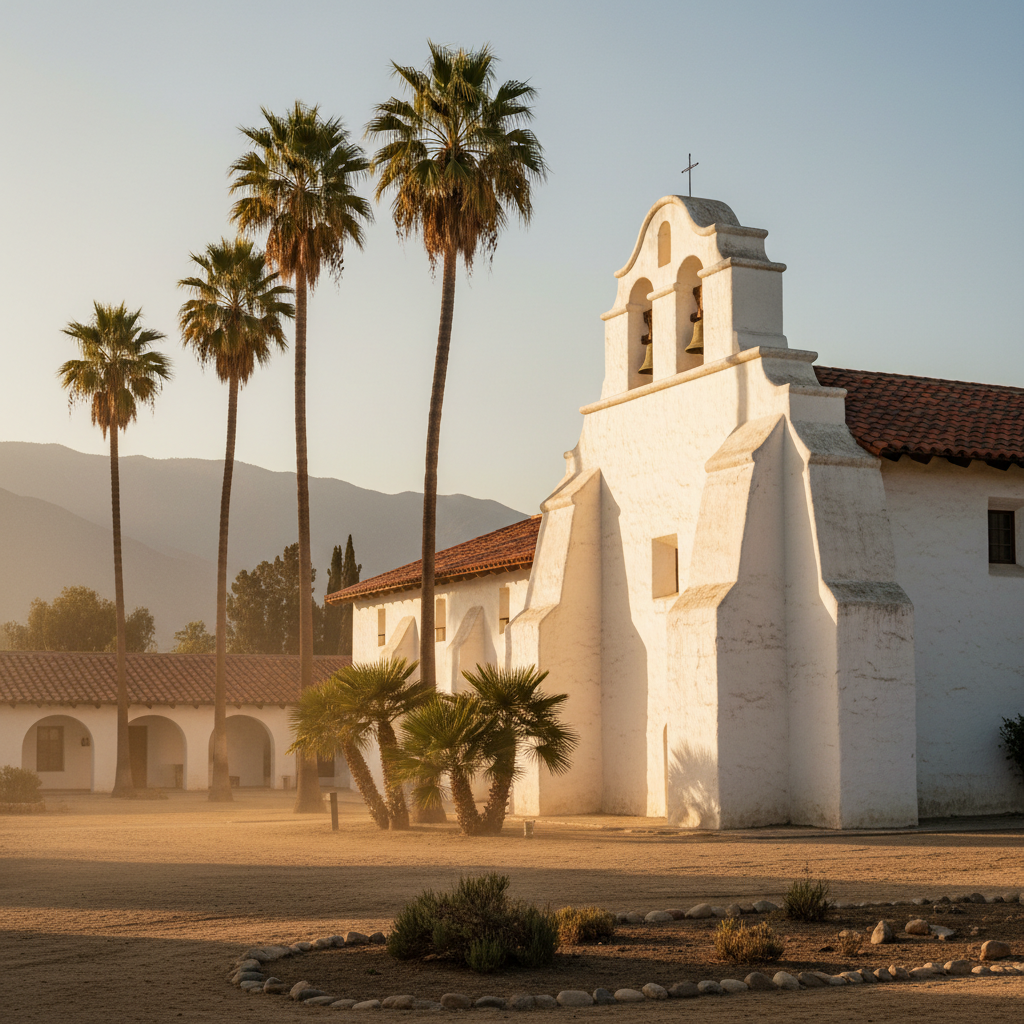
The founding of Mission San Gabriel Arcángel brings the Hahamog'na's land under Spanish control, beginning more than a century of mission and rancho life.
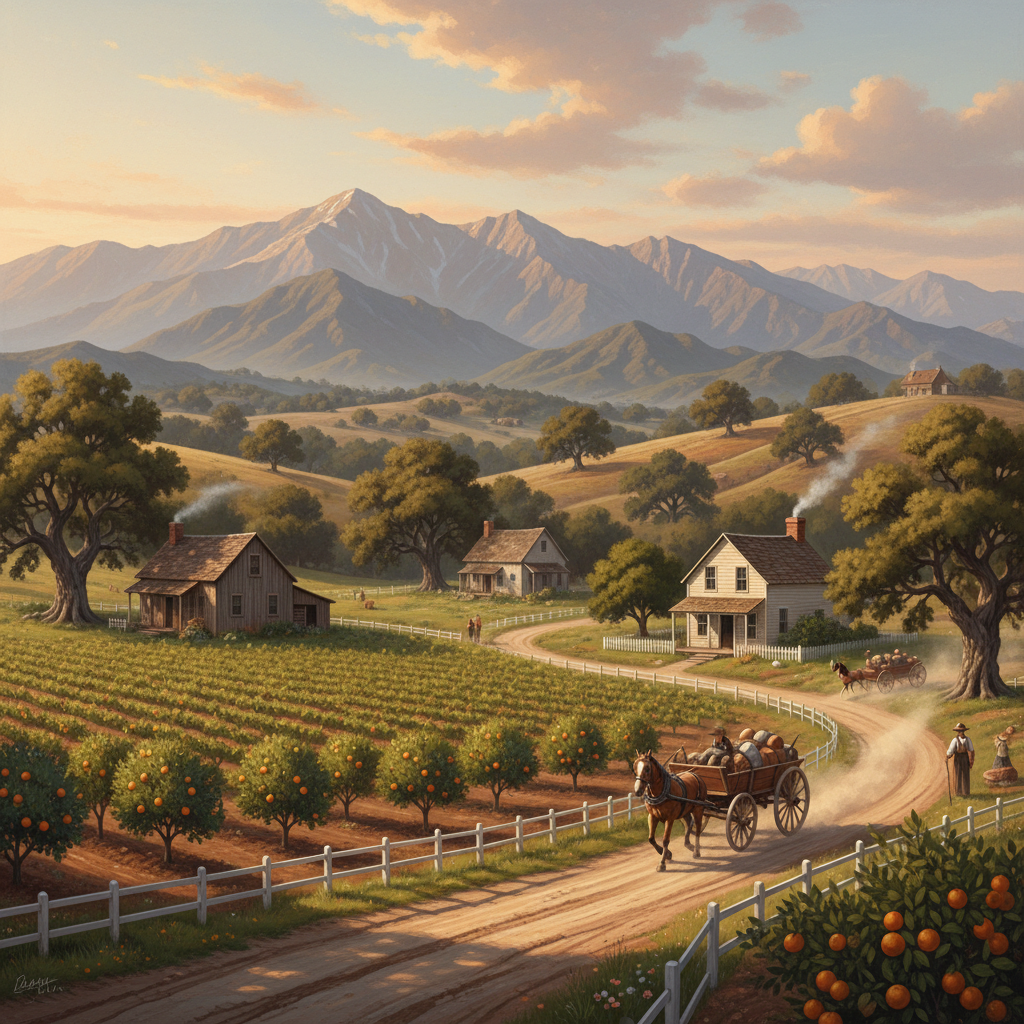
The Indiana Colony — Pasadena's Founding
A group of Indiana settlers seeking a better climate purchases part of Rancho San Pasqual and lays out a new community of citrus groves and orderly streets.
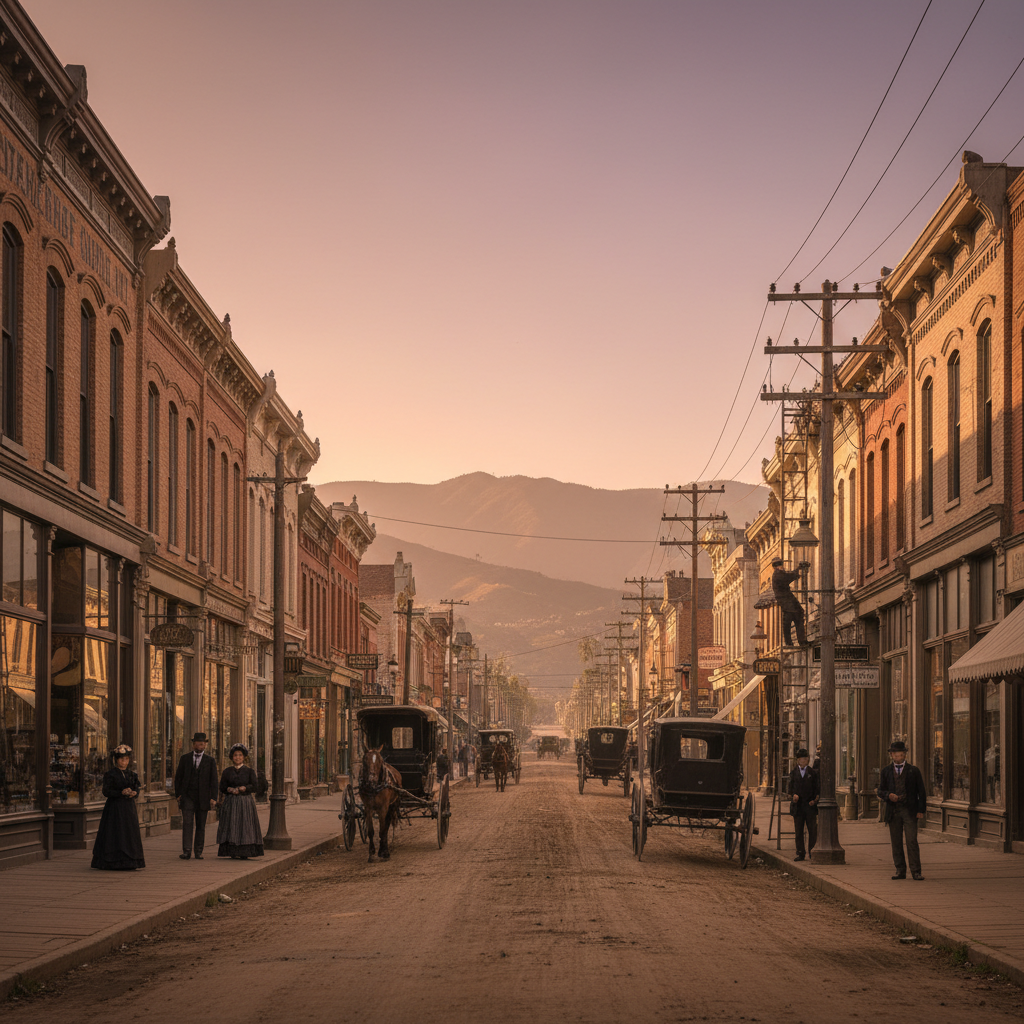
Pasadena Incorporates as a City
On June 19, 1886, Pasadena officially incorporates — and immediately begins building sewers, paved streets, and electric street lighting.
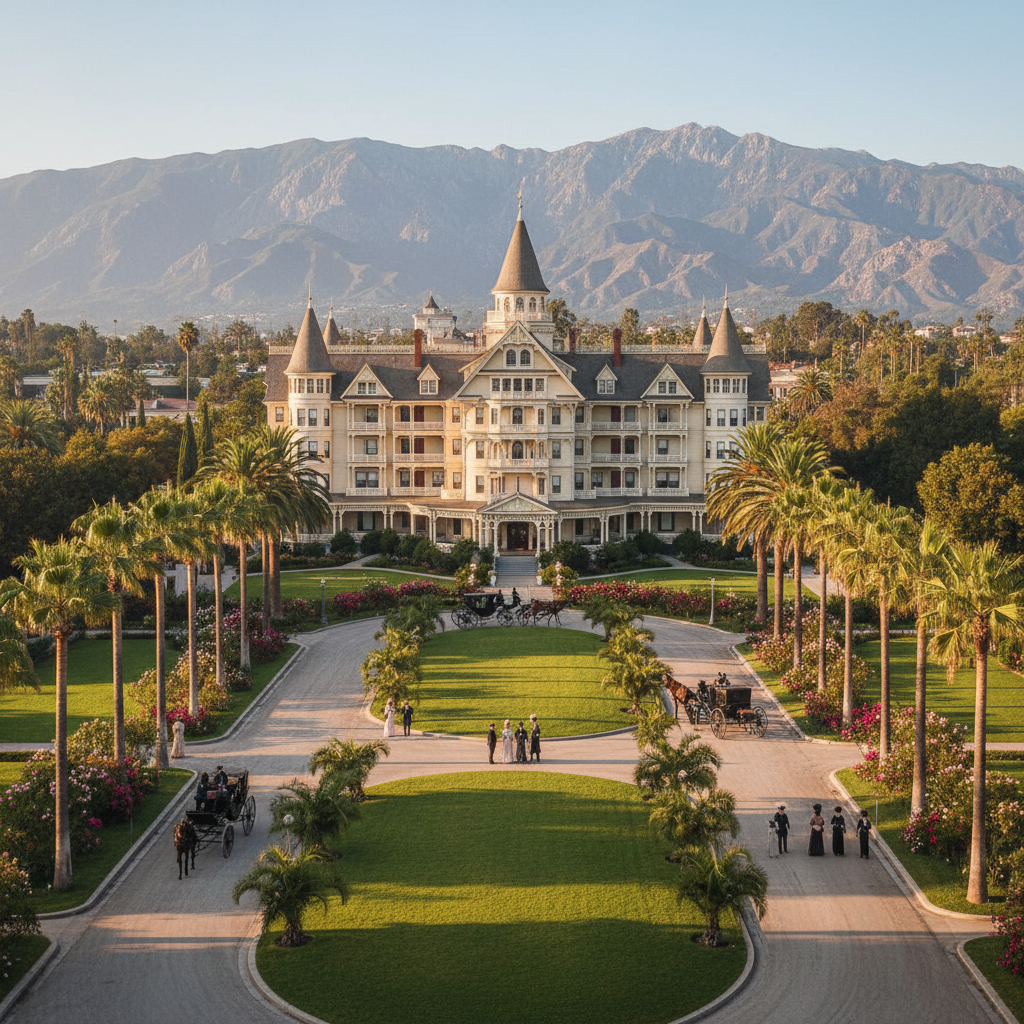
The Resort Era & Millionaire's Row
Wealthy East Coast and Midwest visitors flock to Pasadena's grand hotels and Orange Grove Boulevard mansions, making it one of America's most fashionable winter destinations.
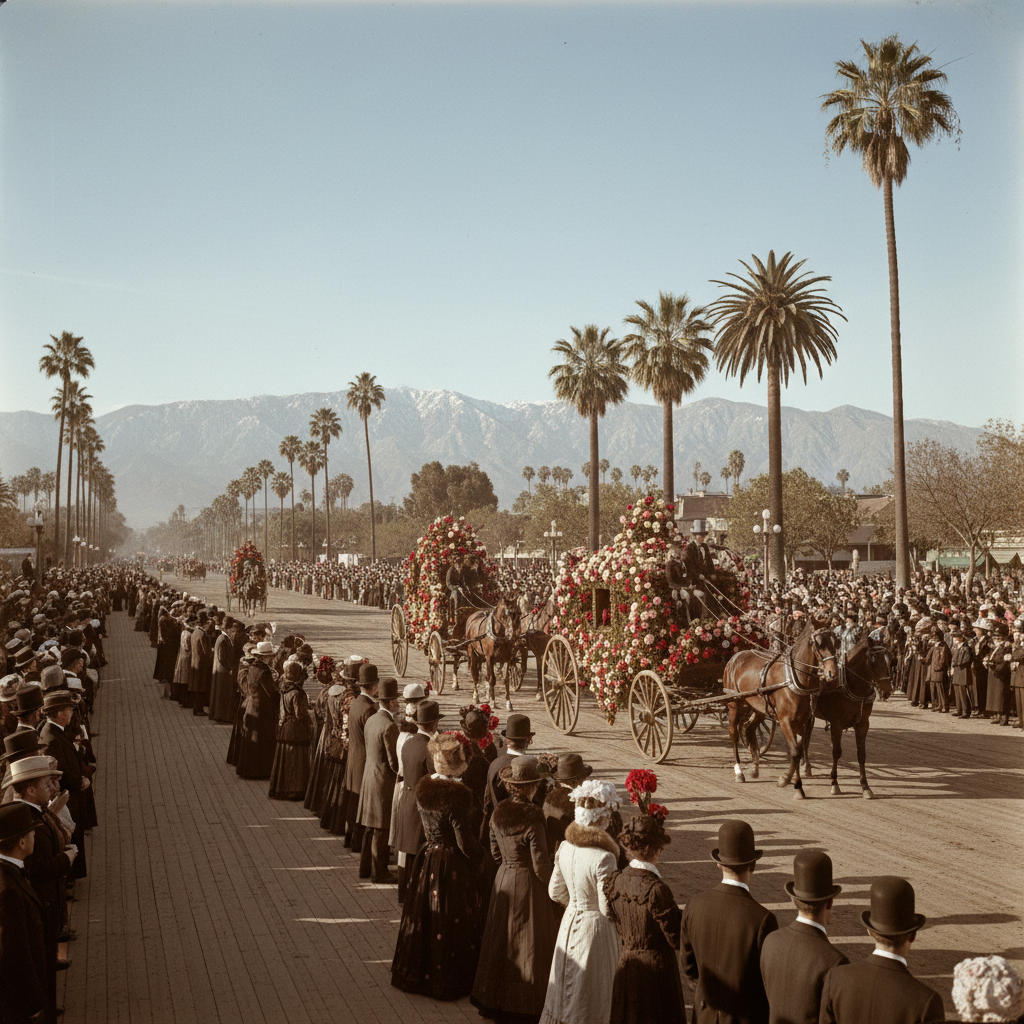
The First Tournament of Roses
On January 1, 1890, the Valley Hunt Club hosts the very first Tournament of Roses — a parade of flower-covered carriages designed to show off Pasadena's mid-winter blooms.
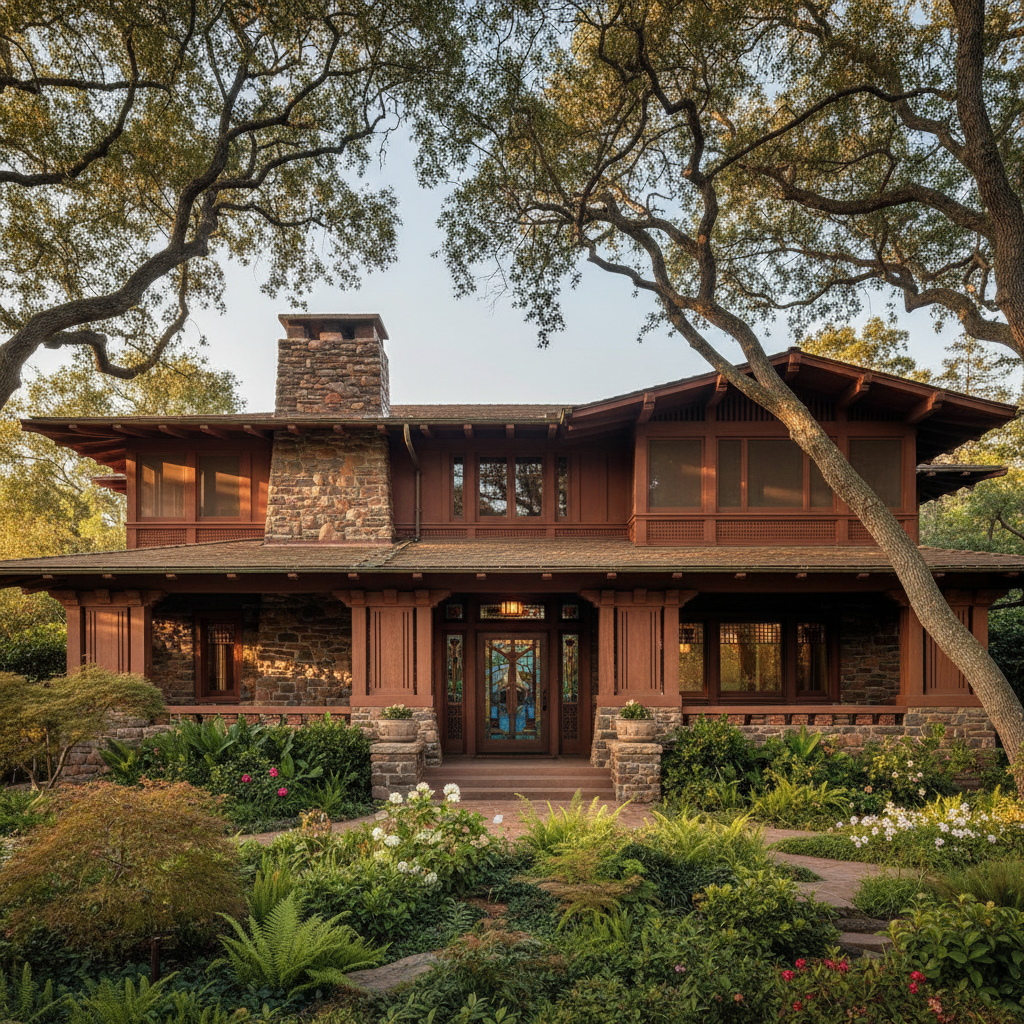
The Gamble House & the Arts and Crafts Movement
Brothers Charles and Henry Greene design the Gamble House and dozens of other Pasadena homes, making the city a global capital of the American Arts and Crafts movement.
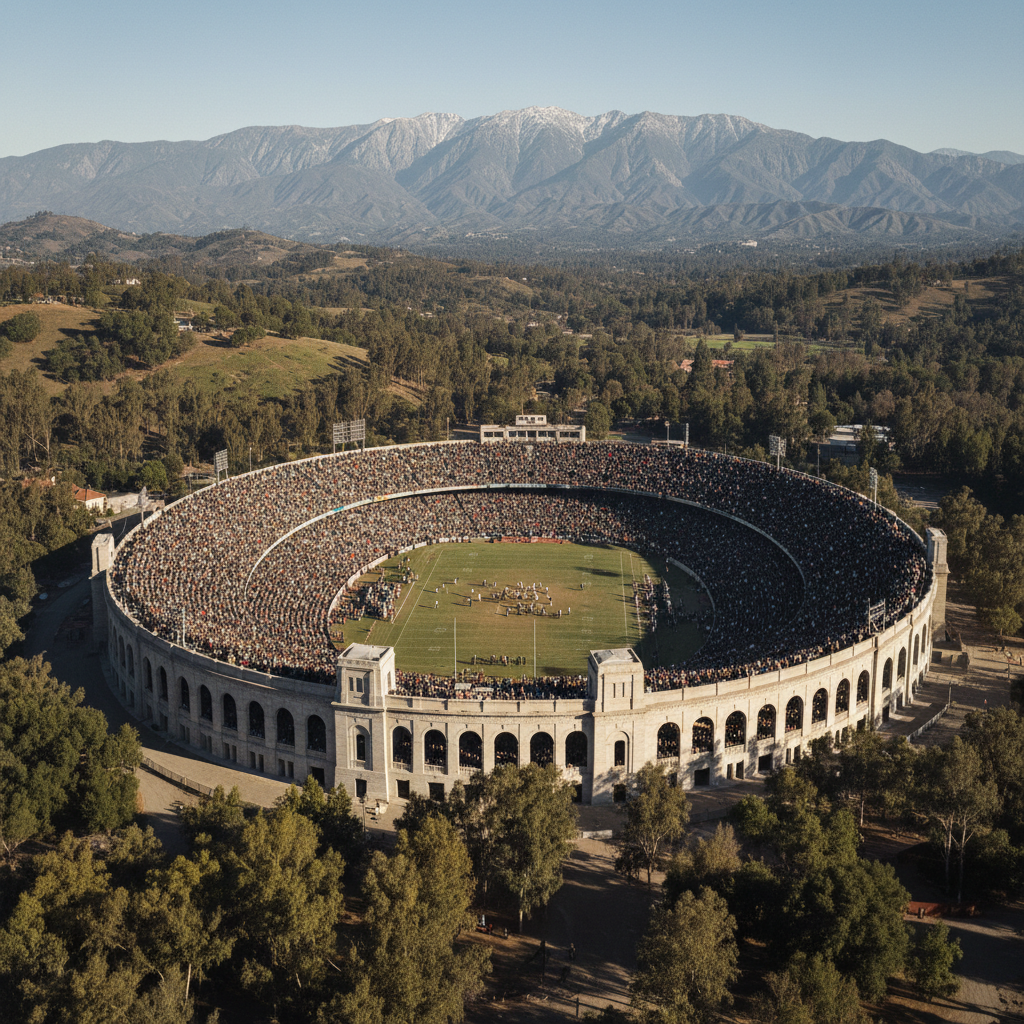
The Rose Bowl Stadium Opens
The Rose Bowl stadium is built in the Arroyo Seco — replacing Tournament Park as the home of the Rose Bowl Game and ushering in the modern era of college football.
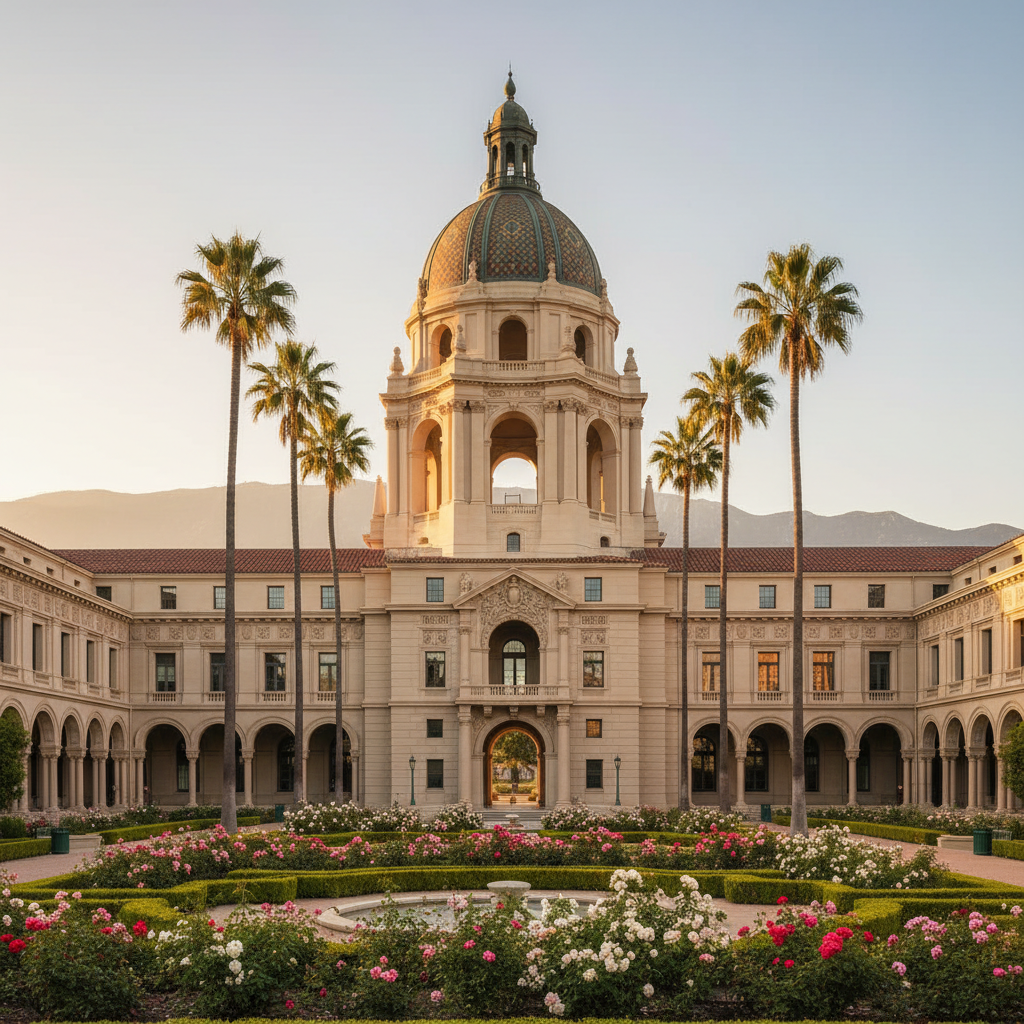
Pasadena City Hall & the Civic Center
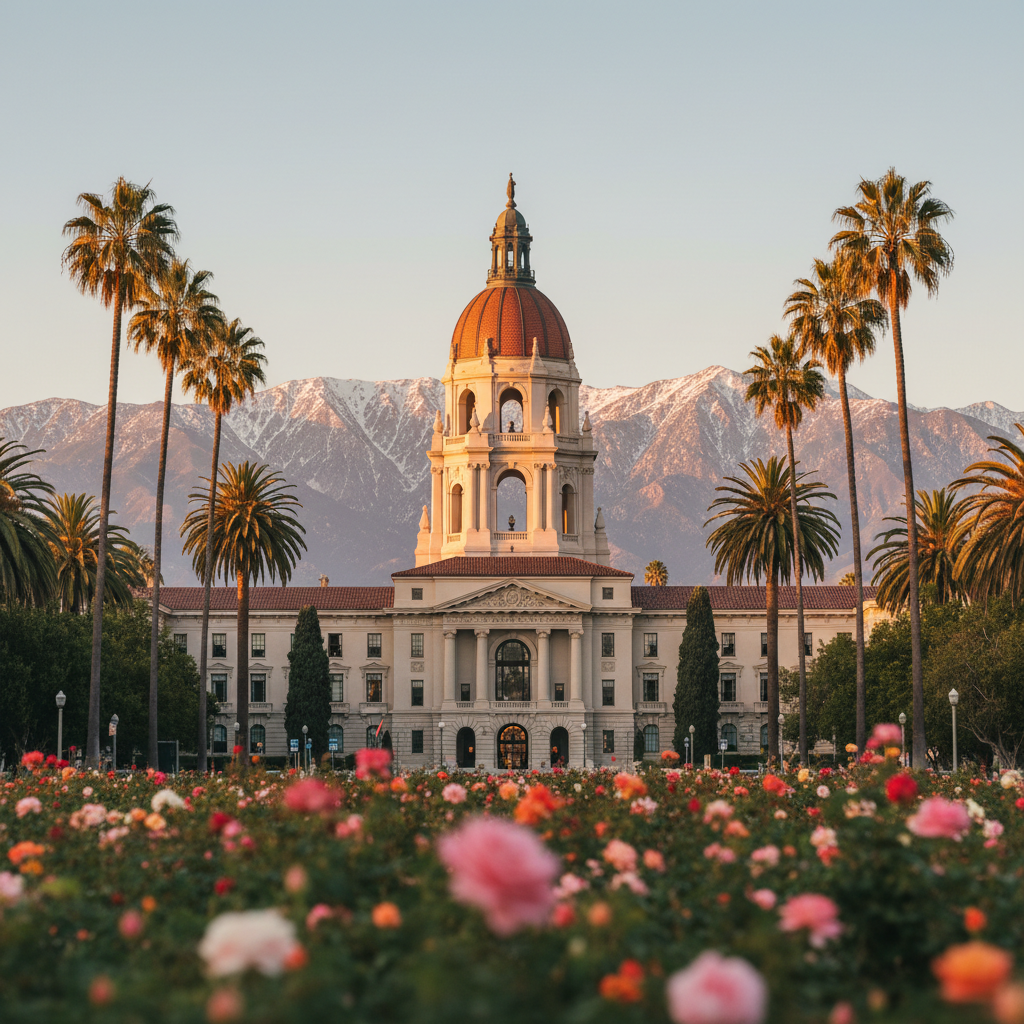
Architects Bakewell & Brown complete Pasadena City Hall — a domed Mediterranean Revival masterpiece that anchors the City Beautiful civic center.
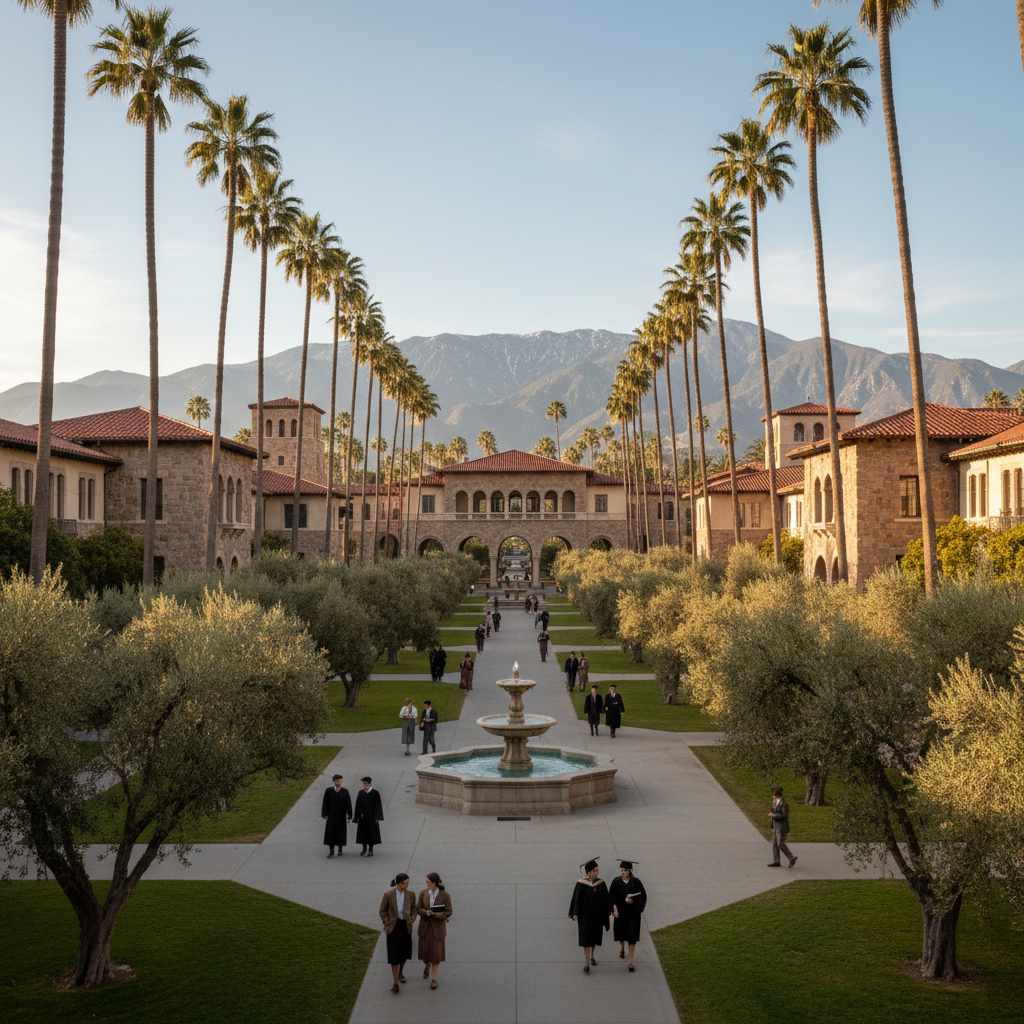
Caltech and the Rise of Pasadena Science
Throop University, founded in 1891, evolves into the California Institute of Technology — making Pasadena one of the most important centers of science in the world.
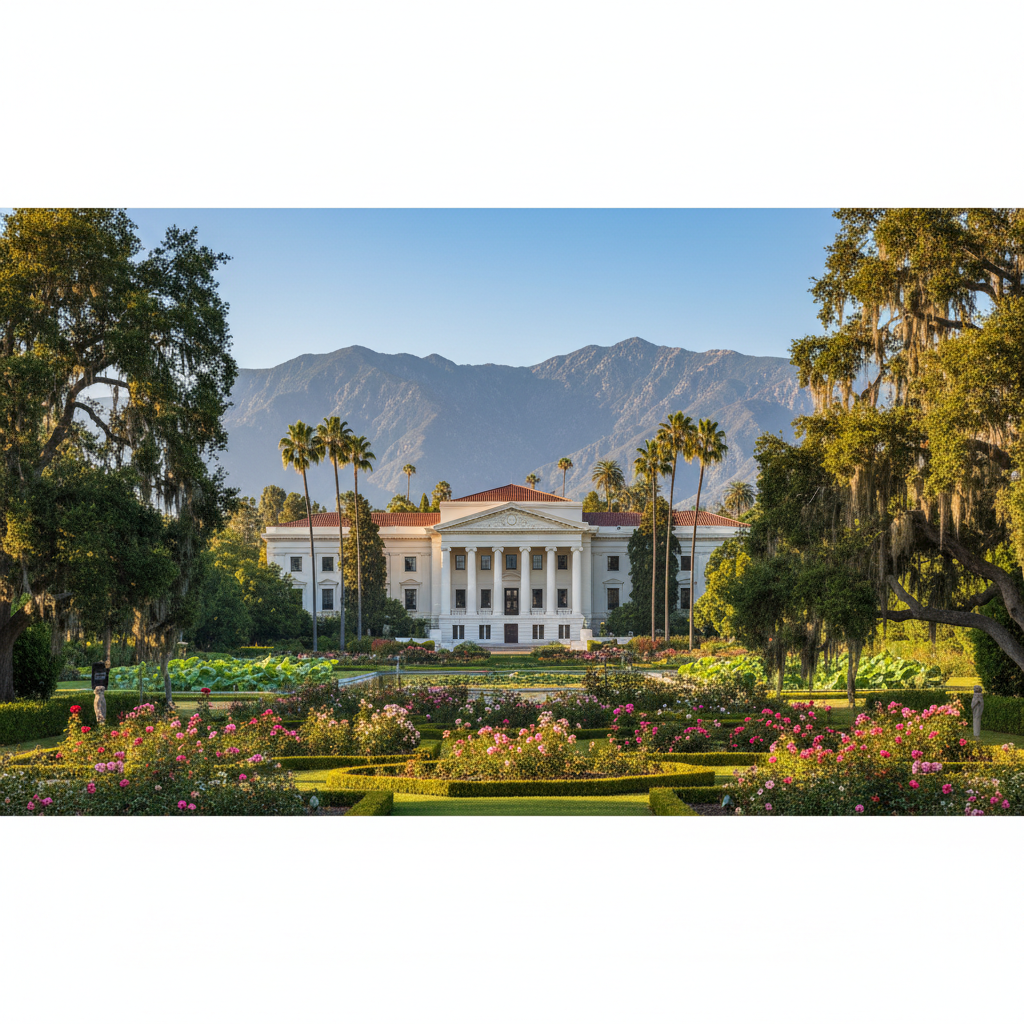
The Huntington — A Library, Art Collection & Gardens
Railroad magnate Henry E. Huntington begins building the estate in San Marino that becomes one of the great cultural institutions of the American West.
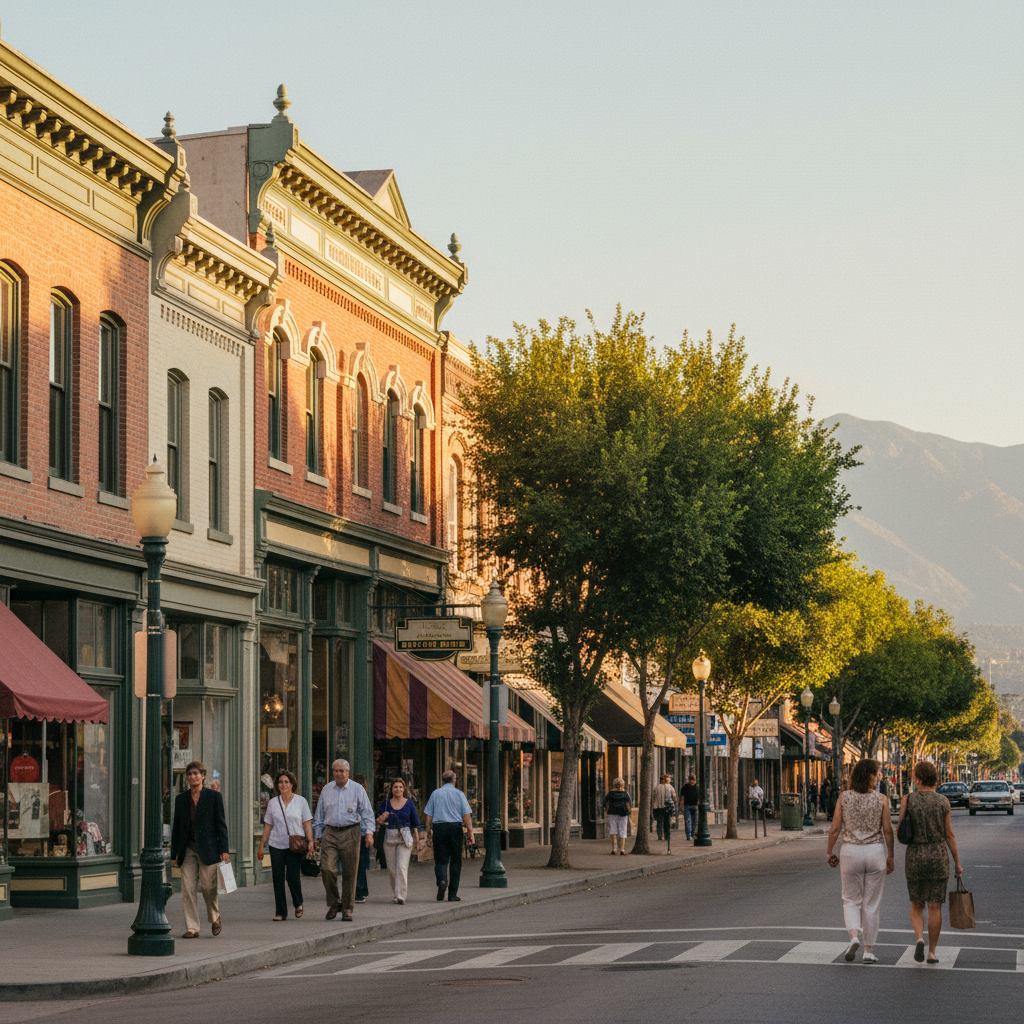
Pasadena Heritage & the Old Pasadena Revival
A historic-preservation movement saves Old Pasadena from demolition — transforming a fading commercial district into one of California's premier walkable historic neighborhoods.
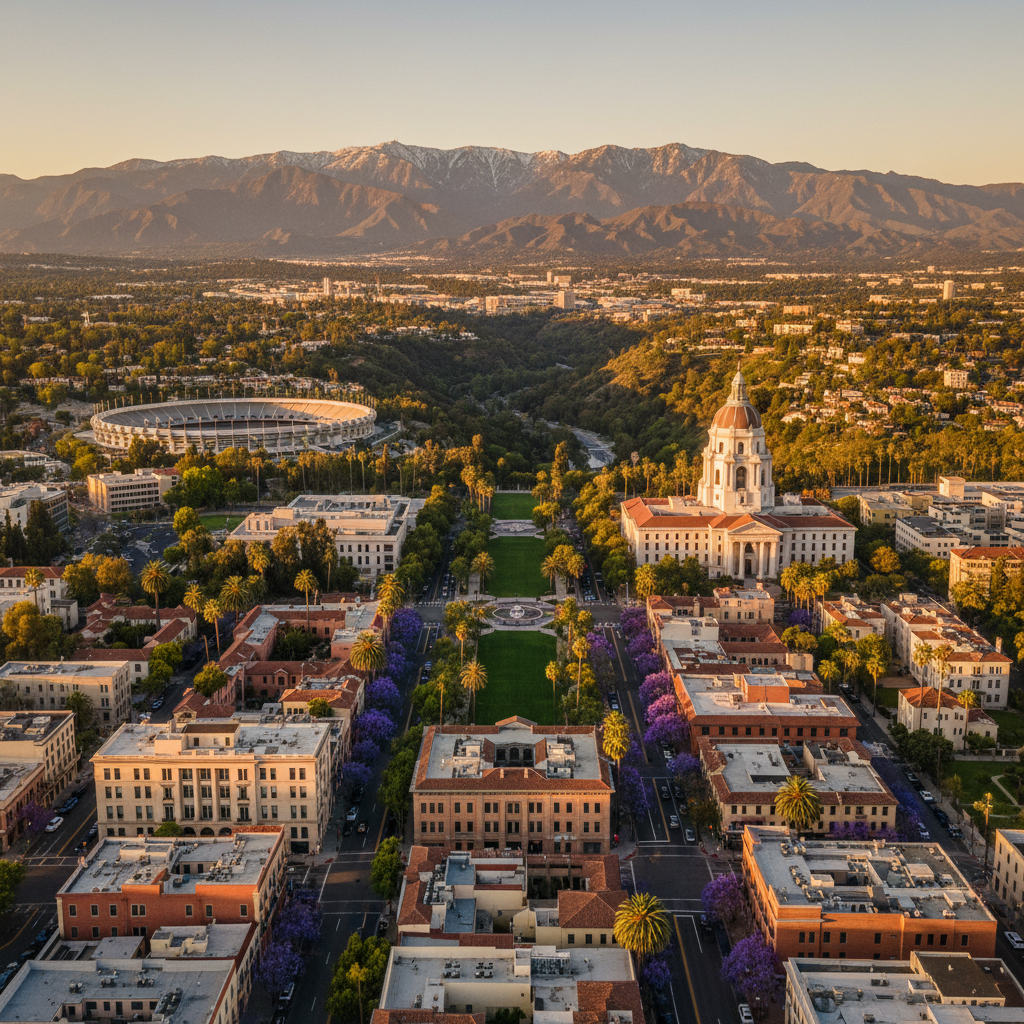
A City of Districts, Architecture, and Living History
Modern Pasadena has more than 30 historic and landmark districts, over 200 designated historic sites, and 26 historic neighborhoods — making it one of the most architecturally protected cities in California.
Why This History Matters Today
You can read Pasadena's history just by walking through it. The Tongva roots are still present along the Arroyo Seco. Bungalow Heaven's original Craftsman cottages are still there. Old Pasadena's 1880s brick blocks are still there. The 1927 domed City Hall still anchors the Civic Center. The Rose Bowl still fills every New Year's Day. Caltech, the Huntington, and the Norton Simon are still world-class institutions.
That layered, visible past is what makes Pasadena unusual — a 23-square-mile city with more than 30 historic districts where every era is still present in the streets. Understanding it is what turns a visit into a connection, and a move into a sense of belonging.
Historic Landmarks
The places that define Pasadena's architectural and cultural identity.
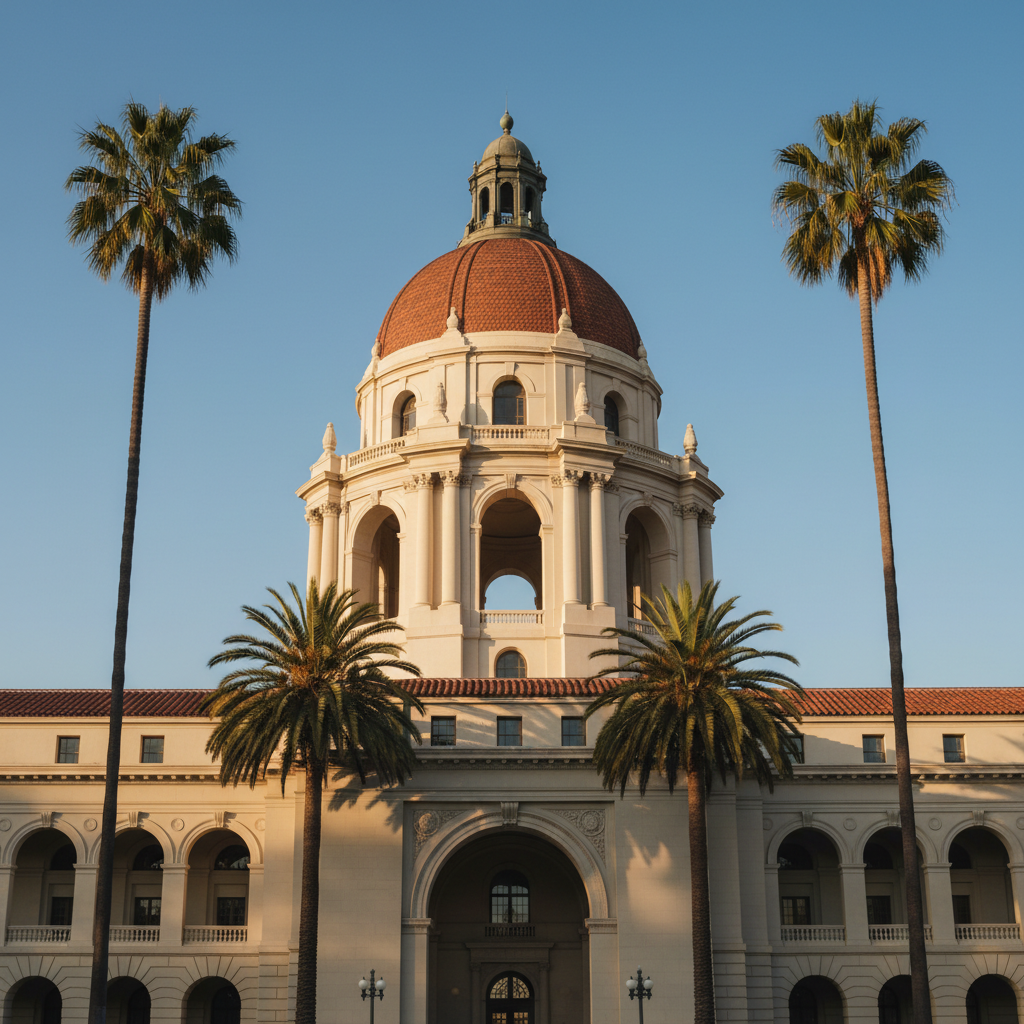
Pasadena City Hall
Domed Mediterranean Revival masterpiece by Bakewell & Brown — the crown of Pasadena's City Beautiful civic center
Completed in 1927 by John Bakewell Jr. and Arthur Brown Jr. (architects of San Francisco City Hall), Pasadena City Hall combines Mediterranean Revival, Spanish Colonial Revival, and Beaux-Arts traditions under a 206-foot domed tower. The civic center axis it anchors also includes the 1927 Pasadena Public Library and the 1932 Civic Auditorium.
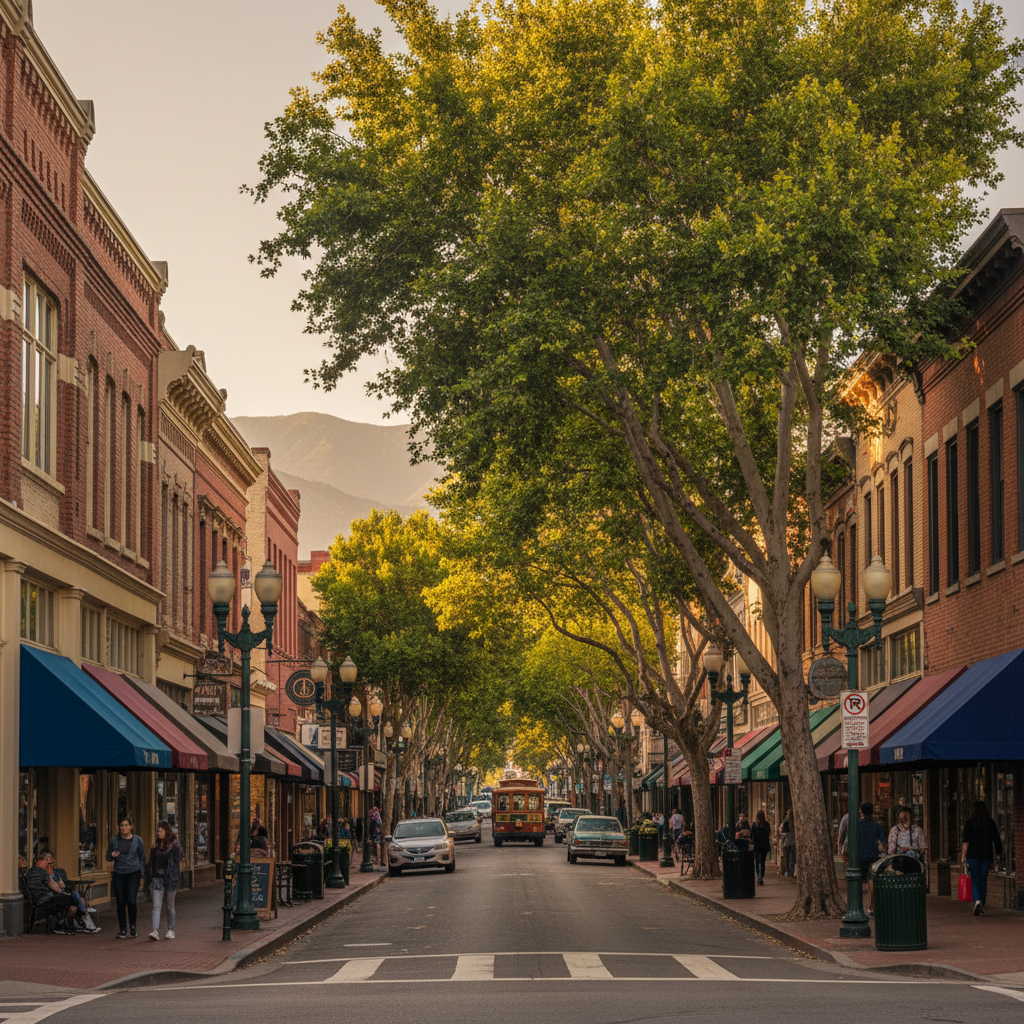
Old Pasadena
Pasadena's original 1880s commercial district — a National Register Historic District revived through the Pasadena Heritage movement
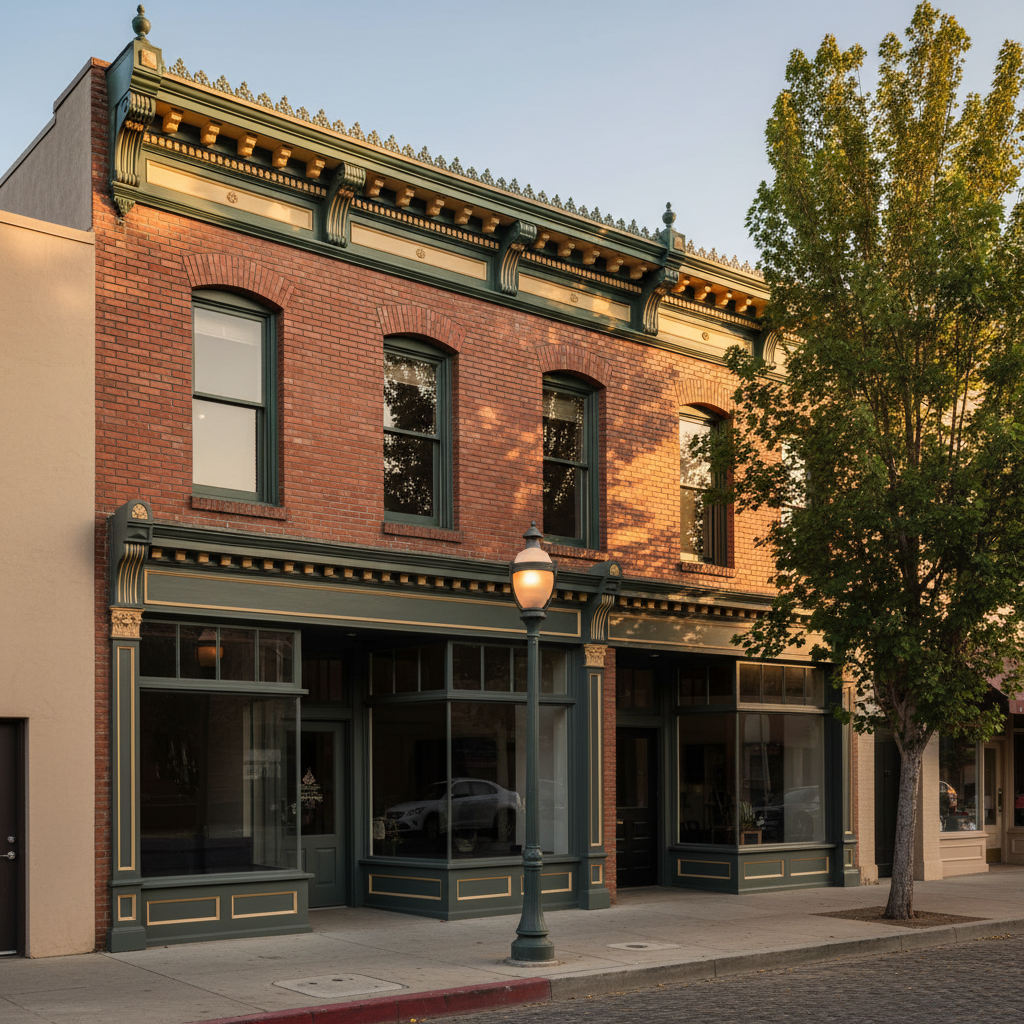
Old Pasadena is the city's original commercial heart. Its 1880s and 1890s brick storefronts, alleyways, and cast-iron facades were saved from demolition by Pasadena Heritage beginning in the late 1970s. Today it is a thriving 22-block historic district — restaurants, shops, theaters, and live music inside carefully restored Victorian and early-20th-century buildings.
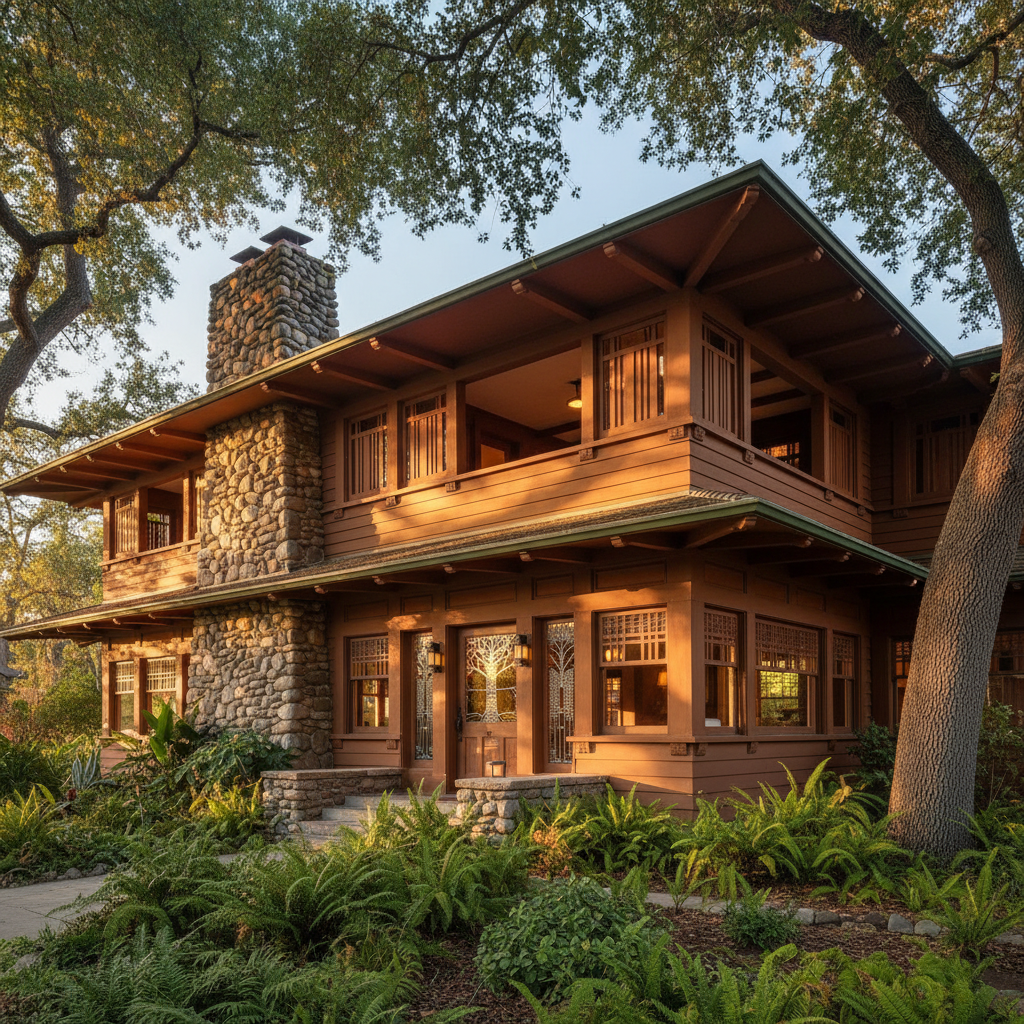
The Gamble House
Greene & Greene's Arts and Crafts masterpiece — a National Historic Landmark and one of the most studied houses in America
Designed by Charles and Henry Greene in 1908 for David and Mary Gamble of Procter & Gamble, the Gamble House is the defining example of the American Arts and Crafts movement. Redwood, teak, oak, mahogany, and Tiffany glass are joined with handcrafted precision in every door, lantern, and built-in. It is open for public tours and a National Historic Landmark.
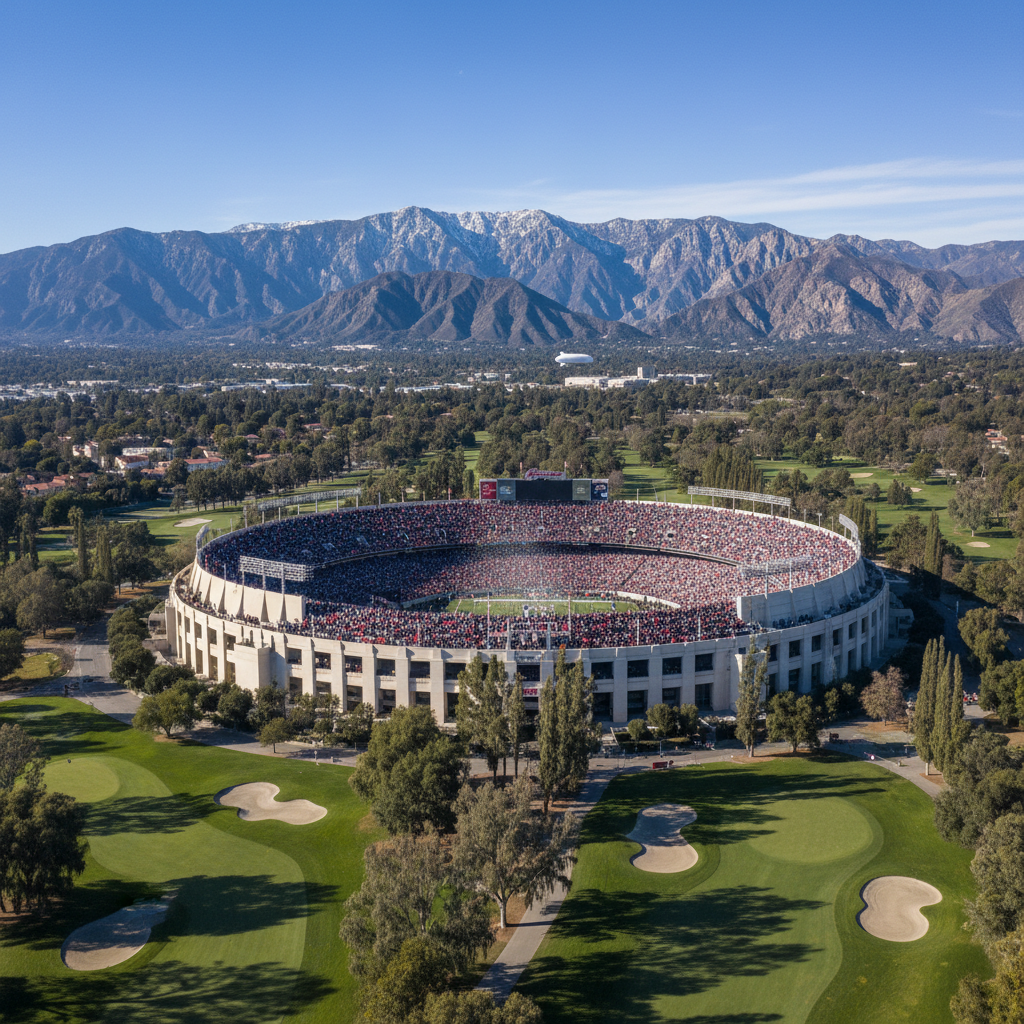
Rose Bowl Stadium
National Historic Landmark — home of the Rose Bowl Game since 1923 and the spiritual capital of college football
Built in 1922 in the Arroyo Seco below Pasadena's western edge, the Rose Bowl was originally a horseshoe-shaped stadium designed by Myron Hunt and later enclosed. Home of the Rose Bowl Game, five Super Bowls, two FIFA World Cup finals, and the long-running flea market, the Rose Bowl is one of the most recognized stadiums on Earth.
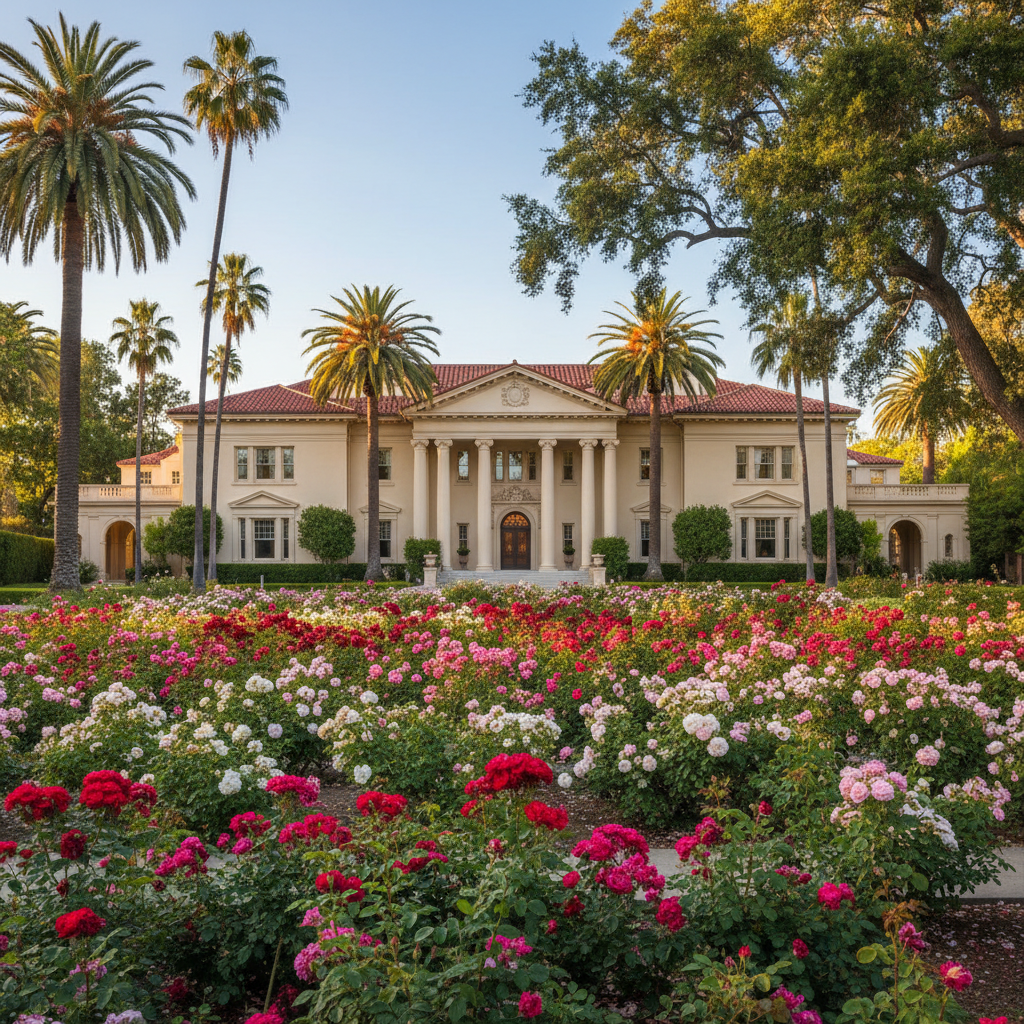
Tournament House (Wrigley Mansion)
The headquarters of the Tournament of Roses — formerly the winter home of chewing-gum magnate William Wrigley Jr.
Built in 1914 as the winter residence of William Wrigley Jr., this 18,500-square-foot Italian Renaissance mansion on Millionaire's Row was donated by the Wrigley family to the City of Pasadena in 1958 on the condition it become the permanent home of the Tournament of Roses Association. The surrounding rose garden contains more than 1,500 rose bushes.
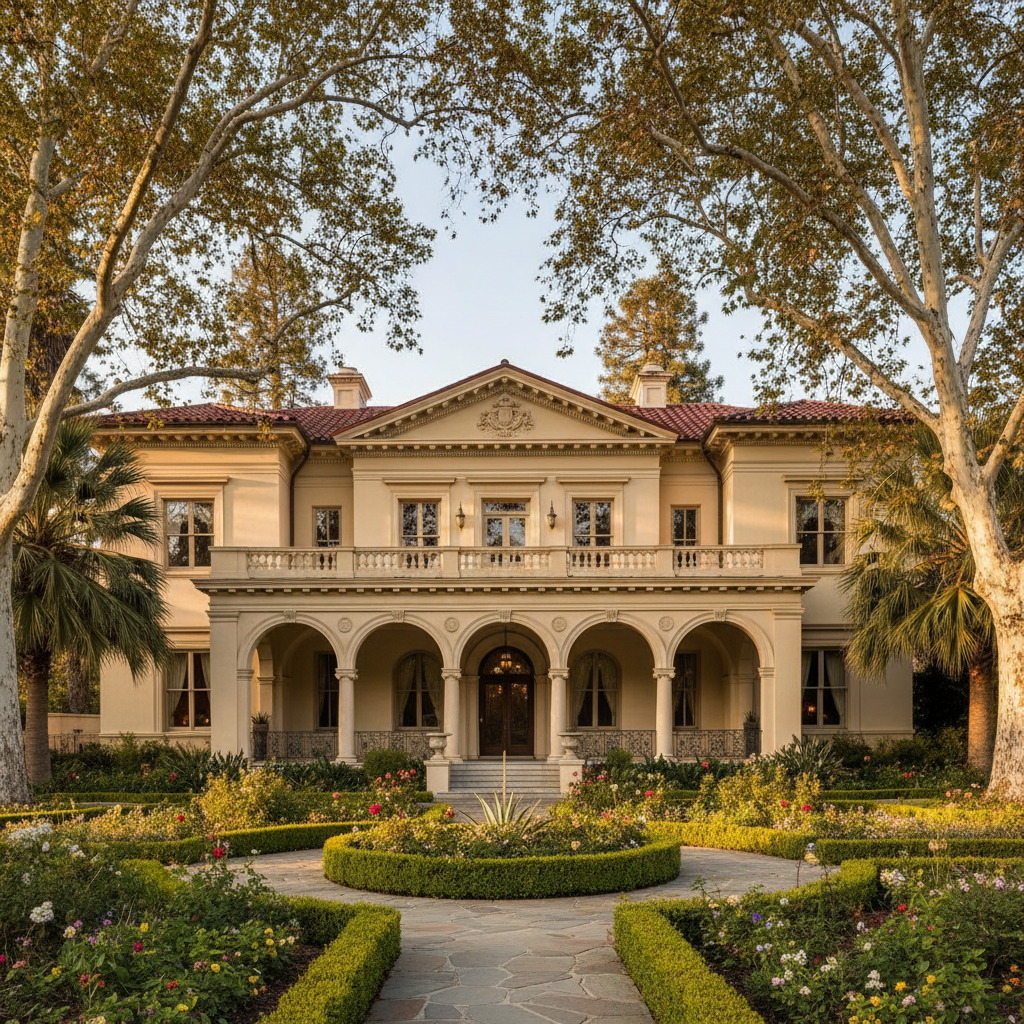
Pasadena Museum of History
The only museum dedicated solely to preserving and sharing the history, art, and culture of Pasadena
Founded as the Pasadena Historical Society in 1924, the Pasadena Museum of History is housed at the historic Fenyes Mansion (1906), one of the last great Beaux-Arts estates on Orange Grove Boulevard. Its archives include more than one million photographs, maps, manuscripts, and artifacts — a foundational resource for any serious study of Pasadena's past.
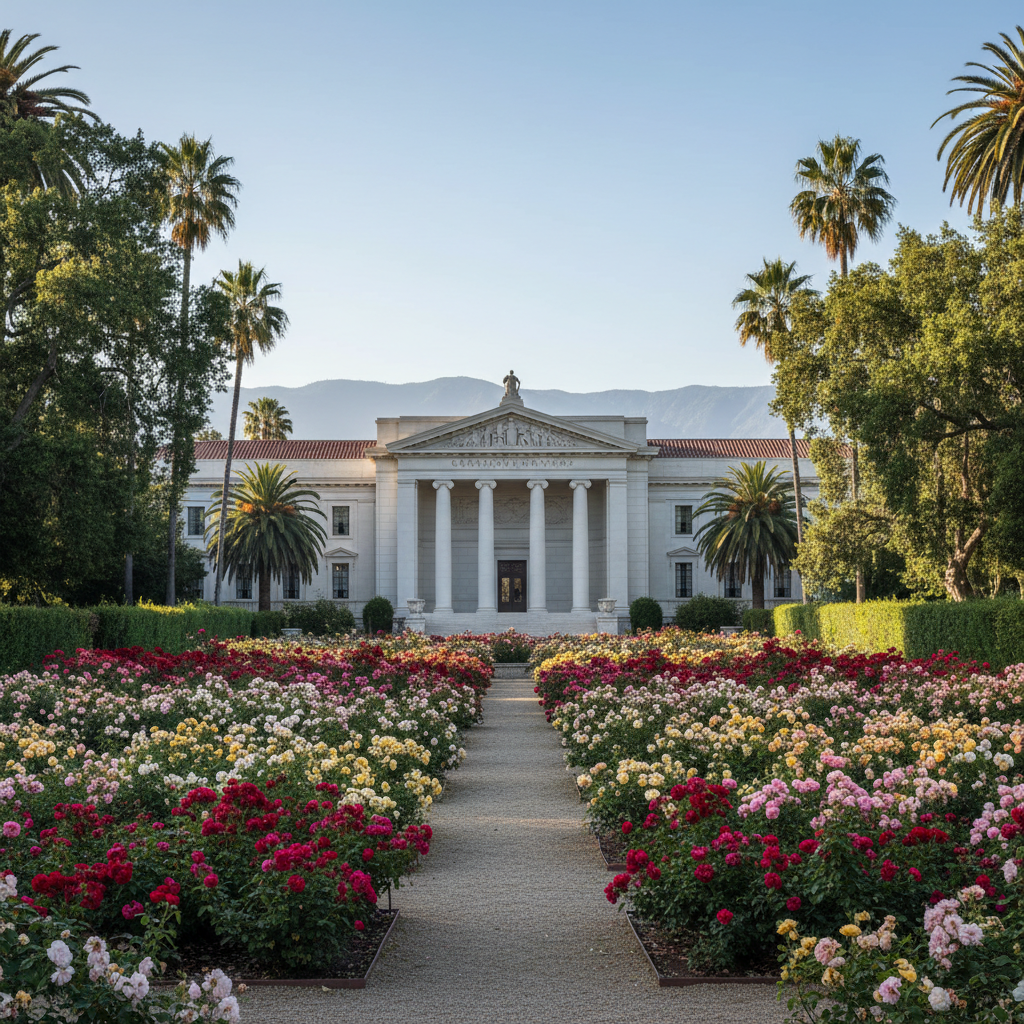
The Huntington
Library, art museum, and 120 acres of botanical gardens — one of the great cultural institutions of the American West
Henry E. Huntington's San Marino estate, opened to the public in 1928, houses a world-class research library (Gutenberg Bible, early Shakespeare folio), the Huntington Art Gallery (Gainsborough's 'Blue Boy,' Lawrence's 'Pinkie'), and 120 acres of themed botanical gardens including the famous Japanese Garden and Chinese Garden of Flowing Fragrance.
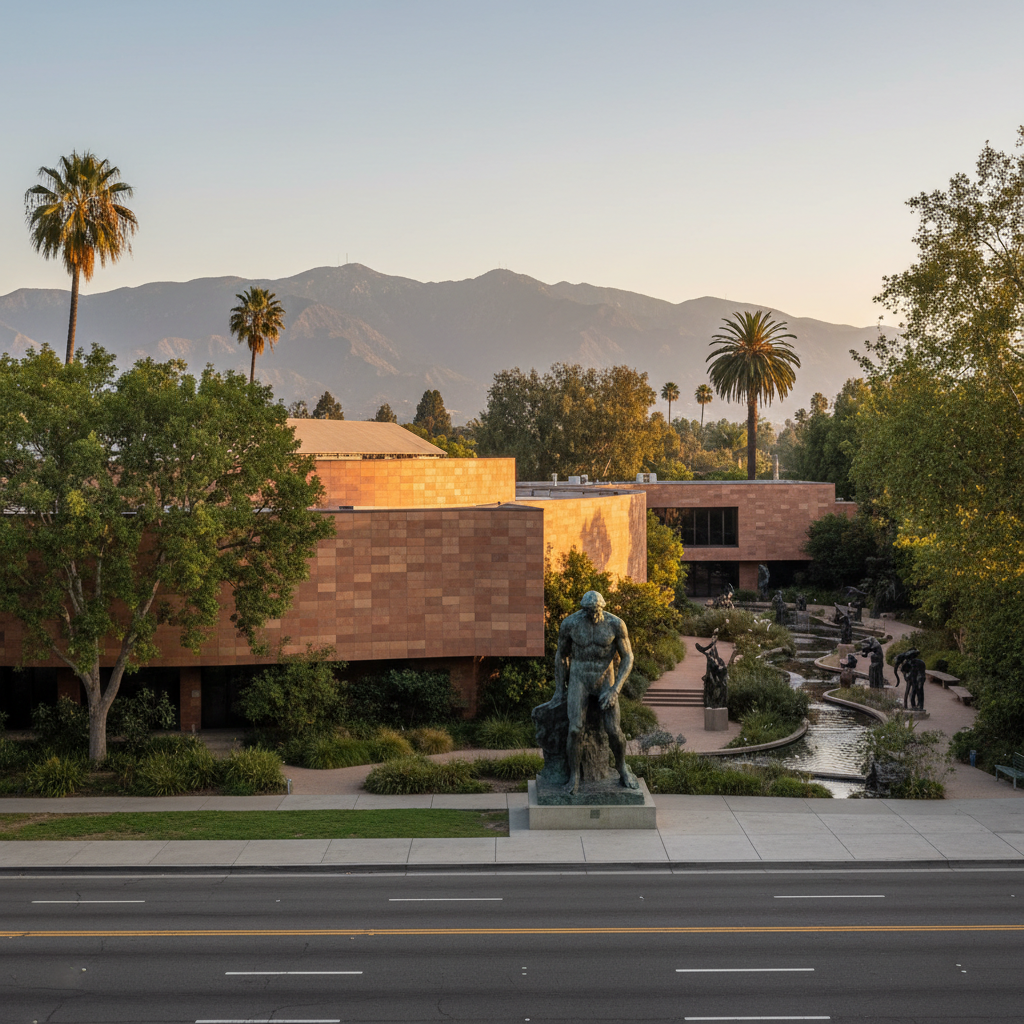
Norton Simon Museum
One of America's finest small museums — European, Asian, and modern art on the Rose Parade route
Located at the western end of Colorado Boulevard along the Rose Parade route, the Norton Simon Museum holds one of the most distinguished private art collections in the United States, ranging from Old Masters (Raphael, Rembrandt, Goya) to Impressionists (Degas, Monet) to ancient South and Southeast Asian sculpture. Architect Frank Gehry's 1999 redesign reorganized the galleries around a central sculpture garden.
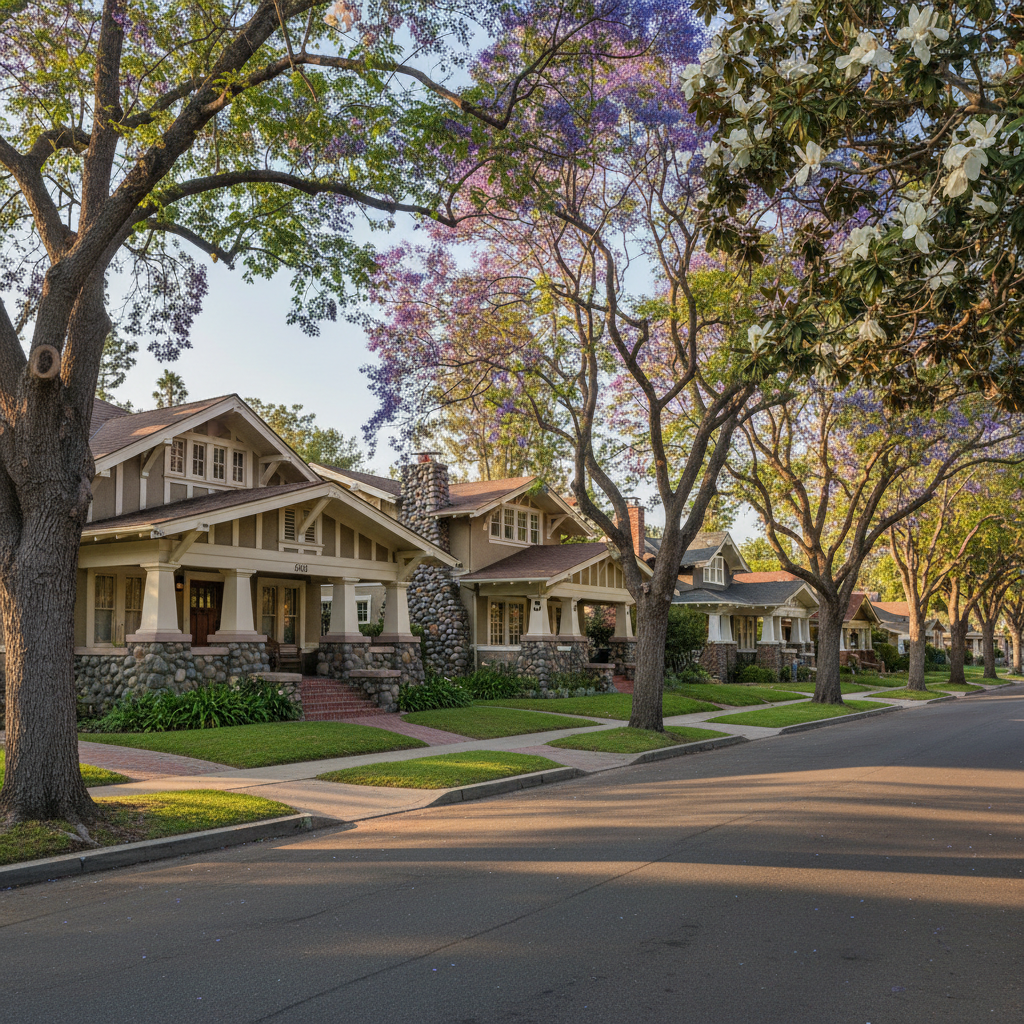
Bungalow Heaven Historic District
Pasadena's first Landmark District — about 800 preserved Craftsman bungalows across 16 blocks
Designated in 1989 as Pasadena's very first Landmark District, Bungalow Heaven preserves roughly 800 Craftsman, Folk Victorian, and bungalow-style homes built between 1900 and the 1930s. Streets are shaded by mature trees and the annual Home Tour is one of the most beloved local events. Bungalow Heaven is one of the largest concentrations of preserved Craftsman housing anywhere in California.
A Culture Built in Layers
Pasadena's identity isn't a single story — it's six overlapping ones. Each is alive in the city today.
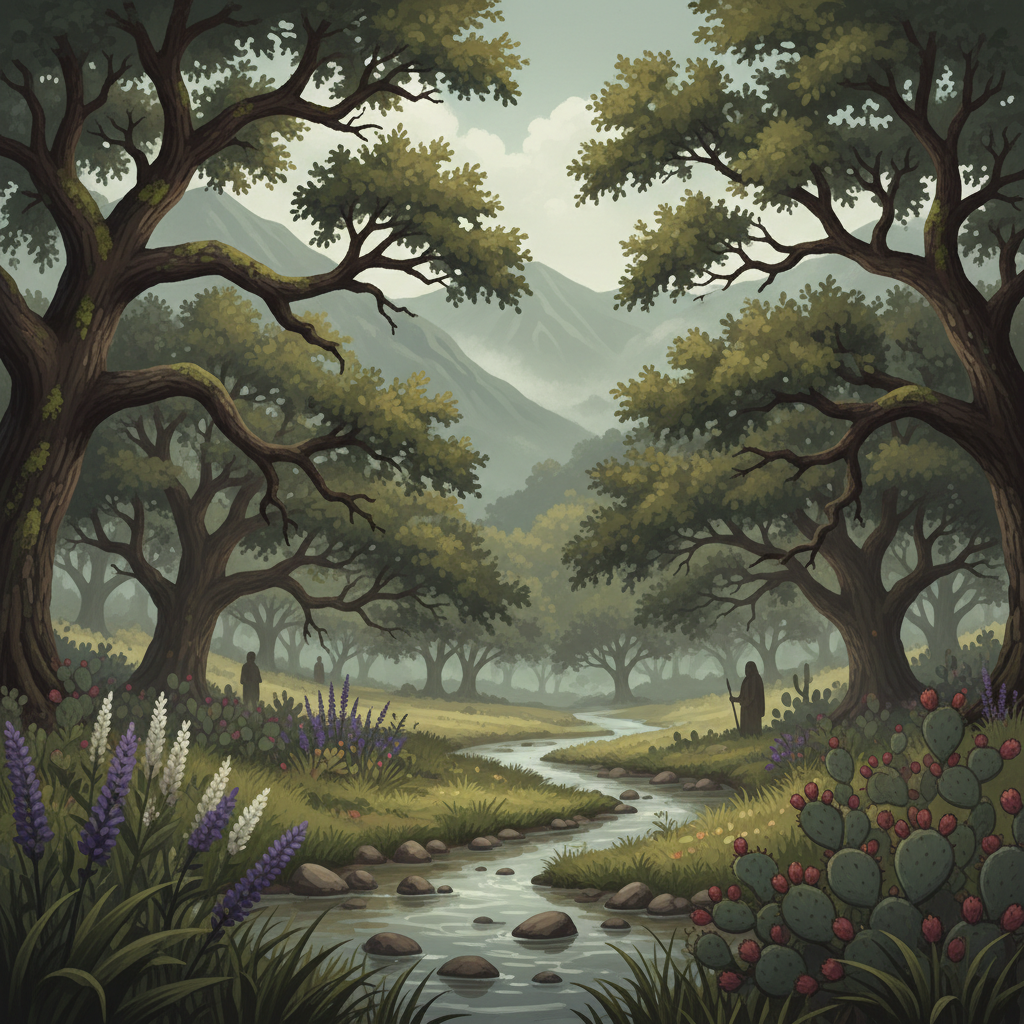
Tongva / Hahamog'na Heritage
The Tongva (Hahamog'na) people lived along the Arroyo Seco for thousands of years before any colonial arrival, and Tongva descendants remain active in preserving the cultural and ecological memory of the Arroyo today.
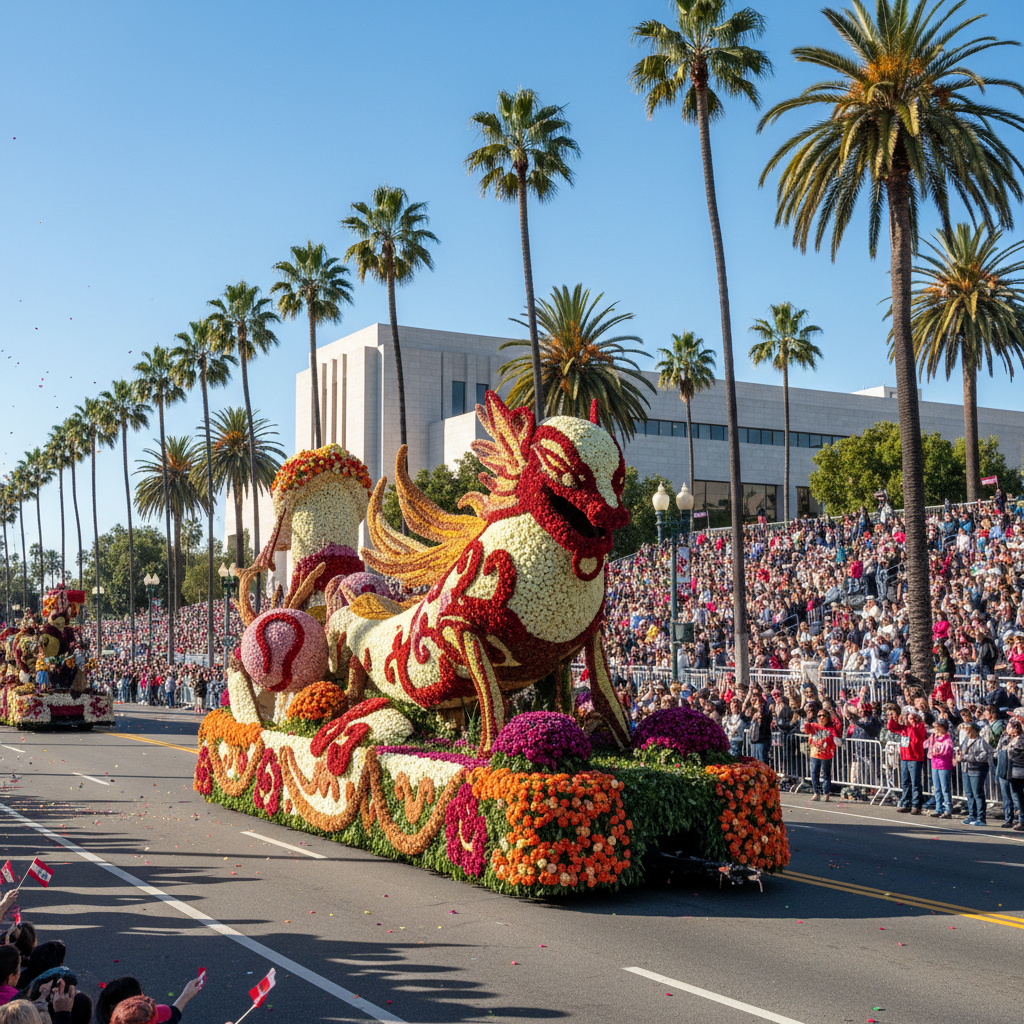
The Rose Parade & Rose Bowl
Since 1890, the Tournament of Roses has projected Pasadena's image to the world every New Year's Day. The 1922 Rose Bowl Stadium turned the city into the spiritual capital of college football.
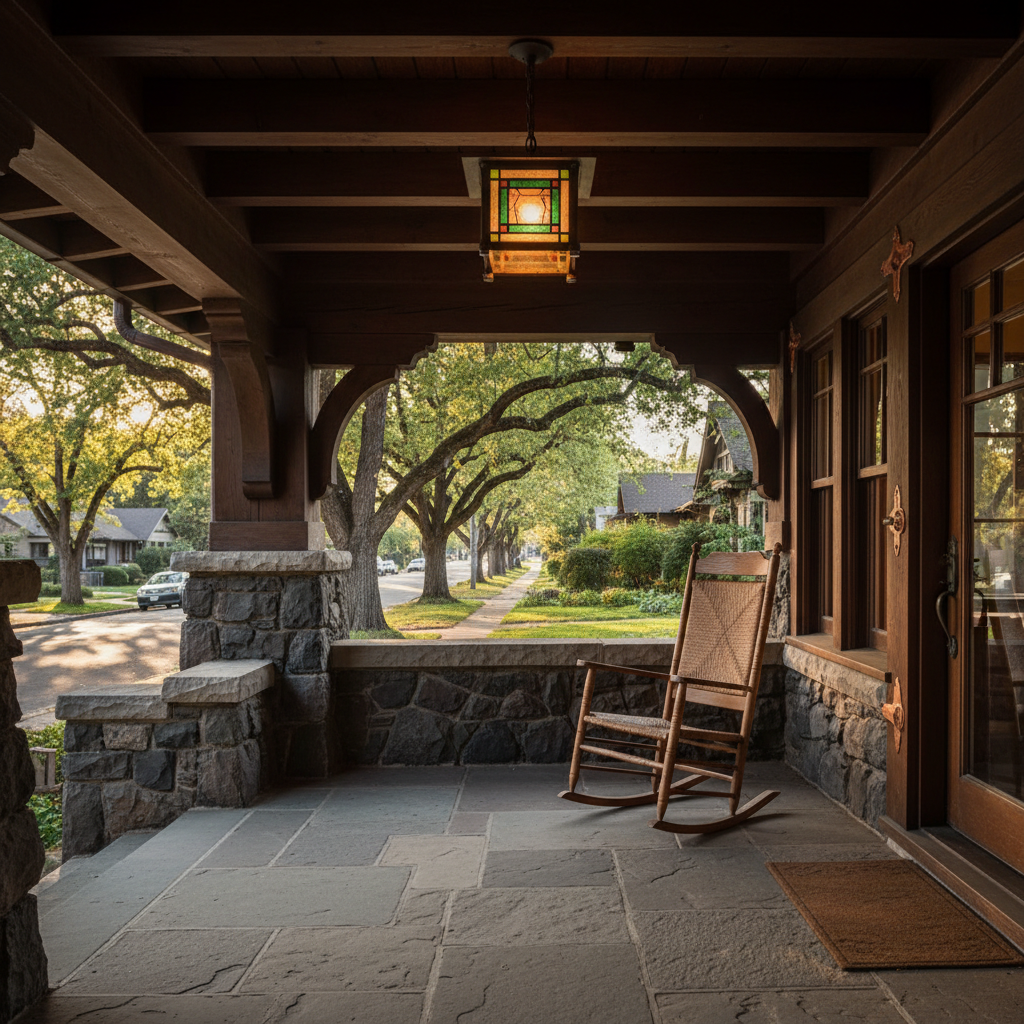
Arts & Crafts Architecture
Greene & Greene, the Gamble House, Bungalow Heaven, and hundreds of Craftsman homes make Pasadena one of the most important Arts and Crafts cities in the world — a fact recognized by the Advisory Council on Historic Preservation.
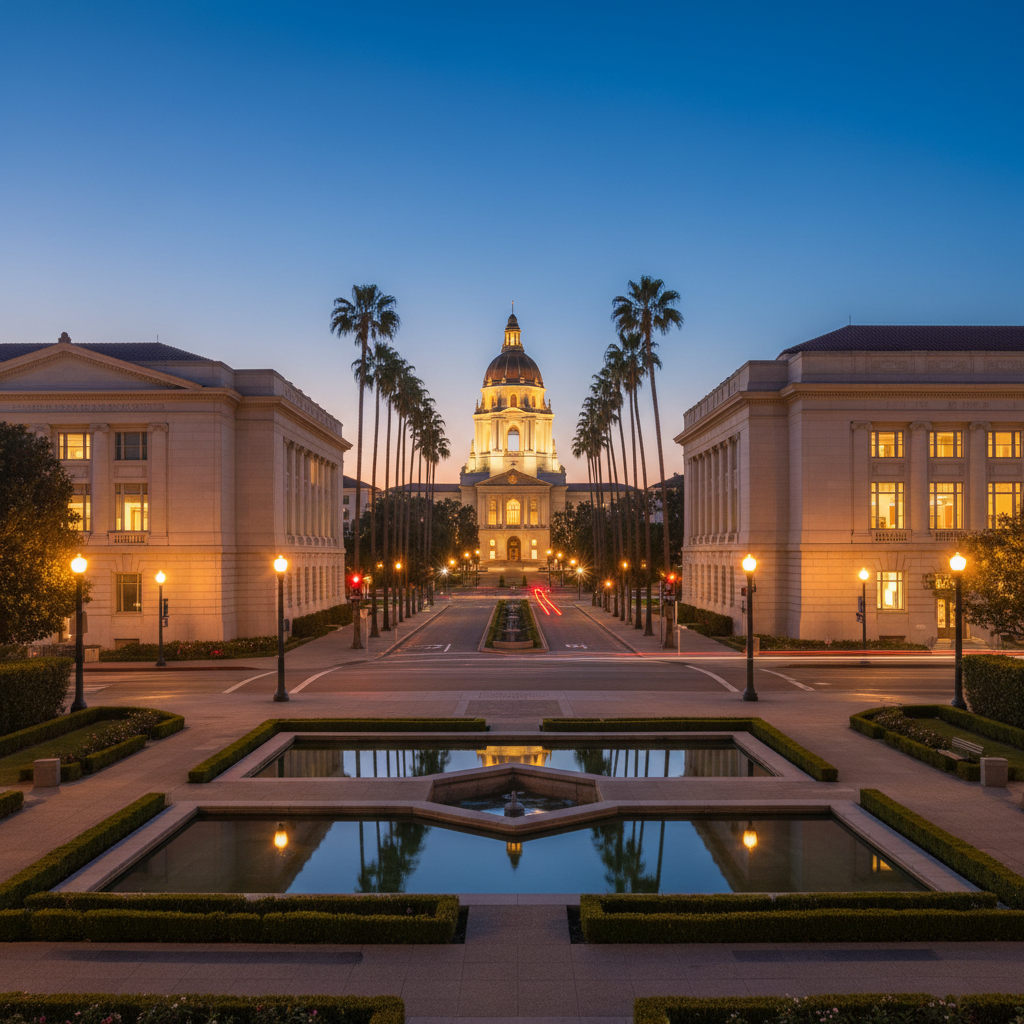
Civic Beauty & City Hall
Pasadena's 1927 City Hall, Public Library, and Civic Auditorium make up one of the most complete City Beautiful civic centers in the United States — Mediterranean Revival architecture organized along a grand civic axis.
Science & Higher Learning
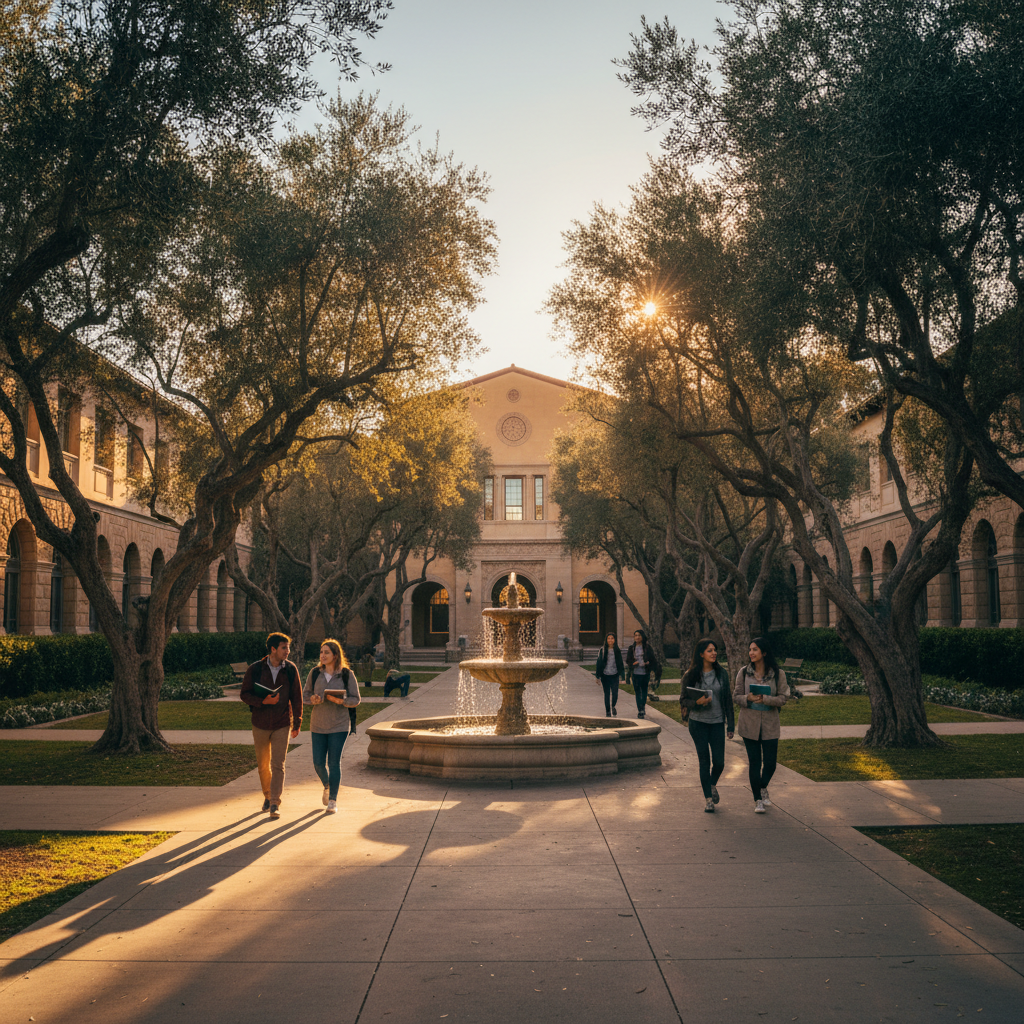
Caltech, the Mount Wilson Observatory, NASA's Jet Propulsion Laboratory, and dozens of Nobel laureates have made Pasadena one of the most important scientific cities of the 20th and 21st centuries.
Preservation as a Civic Identity
With 30+ historic districts in 23 square miles and Pasadena Heritage at the center of saving Old Pasadena, historic preservation is not a hobby in Pasadena — it is part of how the city defines itself.
People Who Shaped Pasadena
The figures behind the Rose City's history — from the original Tongva stewards to the preservationists who saved Old Pasadena.
Hahamog'na (Tongva) Ancestors
Pre-1771 – Today
Original stewards of the Arroyo Seco
Father Junípero Serra
1771
Founder of Mission San Gabriel Arcángel
Dr. Daniel Berry
1873
Indiana Colony scout who chose the Pasadena site
Charles Frederick Holder
1890s
Naturalist & early Rose Parade organizer
Charles & Henry Greene
1900s – 1910s
Arts & Crafts architects — Gamble House
William Wrigley Jr.
1900s – 1932
Chewing-gum magnate, Millionaire's Row resident
Henry E. Huntington
1903 – 1927
Built the Huntington Library & Gardens
George Ellery Hale
1900s – 1930s
Astronomer, Caltech founder, Mt. Wilson Observatory
Robert A. Millikan
1920s – 1940s
Nobel physicist, shaped early Caltech
Myron Hunt
1910s – 1920s
Architect — Rose Bowl, Huntington Library
Bakewell & Brown
1927
Architects of Pasadena City Hall
Sue Mossman & Pasadena Heritage
1977 – present
Preservation movement — saved Old Pasadena
Neighborhoods & Their Stories
Every Pasadena neighborhood carries a distinct chapter of the city's history.
Old Pasadena
1880s – presentThe city's original commercial district. 1880s brick storefronts, cast-iron facades, and a National Register Historic District revived by Pasadena Heritage.
Civic Center
1925 – 1932The City Beautiful core — City Hall (1927), the Public Library (1927), and the Civic Auditorium (1932) aligned along a grand civic axis.
South Lake District
1900s – presentPasadena's classic shopping street, lined with historic commercial buildings and steady evolution into a premier mid-city retail corridor.
Playhouse District
1925 – presentAnchored by the 1925 Pasadena Playhouse — the official State Theater of California — a vibrant district of theater, dining, and architecture.
Bungalow Heaven
1900s – 1930sPasadena's first Landmark District (1989). Roughly 800 preserved Craftsman bungalows across 16 leafy blocks in the northeast.
Madison Heights
1900s – 1930sHistoric Pasadena neighborhood of Craftsman, Spanish Revival, and Mediterranean homes — one of the city's earliest residential districts.
Garfield Heights
1900s – 1930sDesignated Landmark District of well-preserved early-20th-century homes — a quieter window into residential Pasadena's golden era.
Northwest Pasadena
Late 1800s – presentHistorically the heart of Pasadena's African American community, with a rich legacy of churches, music, and civic life.
South Orange Grove (Millionaire's Row)
1880s – 1930sOnce lined with the grand mansions of Wrigley, Busch, and Gamble — the heart of the city's Gilded Age resort era.
Keep Exploring Pasadena
From the neighborhoods that made the city to the parks, restaurants, and events that define it today.
Explore Everything PAS
Stays & Real Estate
Schools & Family
Everything PAS is your premium guide to the Rose City. Historic neighborhoods, world-class museums, the Rose Parade, the San Gabriel Mountains, and refined Pasadena living — all sourced from trusted civic and cultural institutions, curated for the people who call Pasadena home. Part of the Everything California network.
Explore More of California
The Everything Network — 16 California Regions